
Kevin Kiley
Candidate for U.S. Representative, Congressional District 6
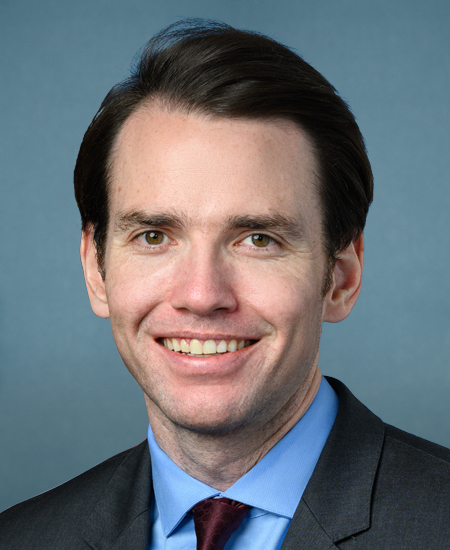
Kevin Patrick Kiley was born January 30, 1985. He is the incumbent U.S. House member for California's 3rd District, first elected in 2022 and re-elected in 2024, and he has held the seat since 2023. He lives in Rocklin, California, and is an attorney. Kiley holds a bachelor's degree from Harvard University and a teaching credential from Loyola Marymount University, and he earned a law degree from Yale Law School. He taught in Los Angeles through Teach for America and was a law clerk at the Federal Reserve Bank of New York. He later worked at the firm Irell & Manella, in the field of intellectual-property law. From 2016 to 2022 he served three terms in the California State Assembly, representing District 6. In 2021, California held a recall election for governor, and he ran in it as a Republican. He lost, finishing sixth. Proposition 50 brought new district maps in mid-decade, and the new lines redrew his district to favor Democrats. In March 2026, Kiley announced a run for the newly configured 6th District rather than his prior one. The district covers Rocklin, Roseville, and Citrus Heights and also takes in parts of Sacramento County. On March 9, 2026, he changed his registration from Republican to no party preference, and he continues to caucus with the House Republican Conference. He faces Democrat Richard Pan on November 3, 2026. Pan is a former state senator and a pediatrician. Both advanced from the June 2026 top-two primary.
On the issues
- Economy & Jobs
Voted against a procedural motion that would have delayed a House vote on the Canada tariffs, saying important economic and national security matters should be debated by the House of Representatives.
“It is in the national interest for important matters of economic and national security policy to be debated by the House of Representatives”
Source → - Health & Health Care
Voted for the 2025 reconciliation bill (H.R. 1), which cut Medicaid funding and barred Planned Parenthood from the program for one year, according to Reproductive Freedom for All's vote record.
Source → - Immigration & Border
Has voted to fund the Department of Homeland Security and calls for a bipartisan Homeland Security bill that funds the whole department while reforming and refocusing immigration enforcement, criticizing hyper-partisanship.
“What we need is a bipartisan Homeland Security bill that funds all components of the department while adopting common-sense reforms to focus the mission of immigration enforcement and rebuild trust.”
Source → - Reproductive & Social Issues
Has voted for abortion restrictions, including the Born-Alive Abortion Survivors Protection Act and a 2025 bill banning abortion coverage in certain health plans, according to Reproductive Freedom for All's vote record.
Source → - Environment, Energy & Climate
Introduced the Biomass Facility Construction Act to create a tax credit for new biomass energy facilities to support wildfire mitigation, and cosponsored the Fix Our Forests Act.
Source → - Foreign Policy & Defense
Provided the decisive discharge-petition signature to force a vote on the Ukraine Support Act and supports continued U.S. material support for Ukraine's self-defense.
“the United States will continue to stand with the Ukrainian people and provide the material support necessary for their self-defense”
Source → - Technology & Privacy
Co-sponsored the bipartisan AI Fraud Deterrence Act to impose stiffer penalties on people who use AI to commit fraud, saying stronger penalties make it likelier that innovation serves the public good.
“By strengthening penalties for criminal misuse, we make it likelier that innovation will serve the public good.”
Source → - Taxes & Cost of Living
Wants to cut federal highway funds to states with very high gas taxes.
“Californians pay the highest gas taxes in America, and they get little to show for it,”
Source → - Housing & Homelessness
Wants housing voucher dollars kept to serve local families in rural and suburban areas.
“Housing assistance programs should work for the communities that fund them and the families who rely on them,”
Source → - Criminal Justice & Courts
Backed the ballot measure to restore penalties for retail theft and drug offenses.
“restore appropriate consequences for criminal activity and give law enforcement the tools needed to keep our communities safe”
Source → - Education & Schools
Opposes shutting down the Education Department but backs reforms to refocus its mission.
“Shutting down the Department of Education is the wrong thing for our country.”
Source → - Family & Social Services
Wants Head Start access protected for California families.
“it is vital that access to these programs is not limited”
Source → - Government, Elections & Democracy
Supports Californians' right to vote by mail and wants election rules made through legislation, not executive orders.
“I support the right of Californians to vote by mail”
Source →
Voting record vs. stated positions
We compared Kevin Kiley’s stated positions with how they voted on key votes in Congress: 2 match, 0 differ, 0 partly match, 3 could not be judged.
Key votes are chosen by topic from what each bill does, before looking at anyone’s vote, and every member is compared the same way. What a bill does comes from the official bill text, the Congressional Research Service and the Congressional Budget Office.
- Foreign Policy & DefenseVote matches statement
Says the United States will continue to provide the material support necessary for Ukraine's self-defense (statement made after House passage of the Ukraine Support Act, H.R. 2913, a 119th Congress bill). Voted Yes on the Ukraine Security Supplemental Appropriations Act, 2024 (2024-04-20), which the CRS summary describes as providing FY2024 emergency supplemental appropriations to DOD, State, USAID and other agencies to respond to the conflict in Ukraine.
- Statement made after the vote
- Foreign Policy & DefenseVote matches statement
Says the United States will continue to provide the material support necessary for Ukraine's self-defense (statement made after House passage of the Ukraine Support Act, H.R. 2913, a 119th Congress bill). Voted Yes on the conference report for the National Defense Authorization Act for FY2024 (2023-12-14), whose CRS summary lists a section extending through 2026 the Ukraine Security Assistance Initiative, which provides security assistance to Ukraine.
- Large bill covering many subjects
- Statement made after the vote
Show 3 comparisons we could not judge
- Immigration & BorderUnclear
Says what is needed is a bipartisan Homeland Security bill that funds all components of the department while adopting common-sense reforms to focus immigration enforcement. Voted No on the Secure America Act (2026-06-09), which the CRS summary describes as a reconciliation bill providing $70 billion through FY2029 to DHS, CBP and ICE for immigration enforcement and border security. The stance does not address a reconciliation funding package specifically, and the CRS summary does not describe enforcement reforms.
- Large bill covering many subjects
- Stated position is too general to judge this bill
- Foreign Policy & DefenseUnclear
Says the United States will continue to provide the material support necessary for Ukraine's self-defense. Voted Yes on the National Defense Authorization Act for FY2026 (2025-12-10), which the CRS summary describes as setting policy on a wide range of defense matters, including DOD interactions with foreign nations concerning Israel, Ukraine and the Indo-Pacific. The CRS summary does not state whether the bill provides material support to Ukraine.
- Large bill covering many subjects
- Statement made after the vote
- Criminal Justice & CourtsUnclear
Says he backed a California ballot initiative to restore consequences for retail theft and drug offenses and give law enforcement the tools to keep communities safe. Voted Yes on the HALT Fentanyl Act (2025-06-12), which the CRS summary describes as permanently placing fentanyl-related substances in schedule I and subjecting related offenses to the same quantity thresholds and penalties as fentanyl analogues, including 10-year mandatory minimums at 100 grams or more.
- Stated position is too general to judge this bill
Profiles are compiled from the candidate’s own statements and public records. We never tell you how to vote.